The construction industry is responsible for shaping cities, connecting communities, and developing essential infrastructure. However, these advancements often come at an environmental cost, including resource consumption, land disruption, and emissions. To counteract these effects, more companies are integrating sustainable practices into their operations, ensuring that progress does not come at the expense of the planet.
Sustainable Solutions in Construction
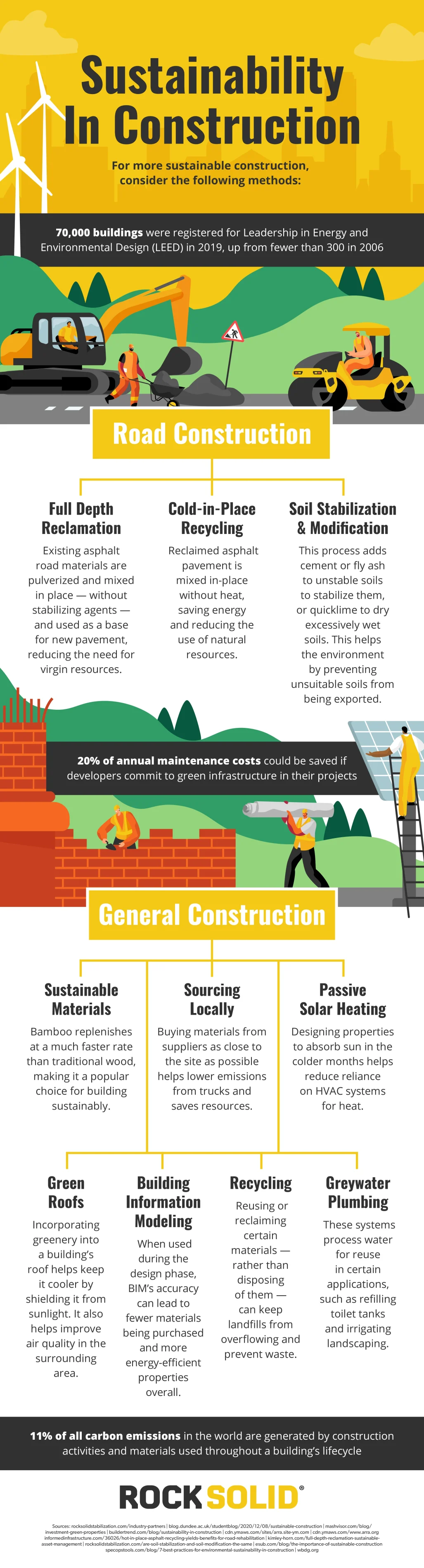
One area where sustainability is making an impact is road construction. In the past, repaving projects required extensive new materials and the removal of unsuitable soil. Now, construction teams are increasingly using milling techniques to recycle old pavement, repurposing it as full depth reclamation asphalt to serve as a foundation for new roads. Additionally, soil stabilization methods help reduce the need for excavation, minimizing disruption to the natural environment.
In building construction, sustainability takes many forms. Green roofs, for instance, improve insulation, lower cooling costs, and enhance urban air quality. Additionally, the use of rapidly renewable materials like bamboo provides a sustainable alternative to traditional wood. Meanwhile, digital modeling technologies allow for more precise planning, reducing material waste and increasing energy efficiency across projects.
Sustainable construction practices are essential for balancing economic growth with environmental responsibility. By implementing innovative techniques, the industry can continue to build the infrastructure society needs while preserving resources for future generations.