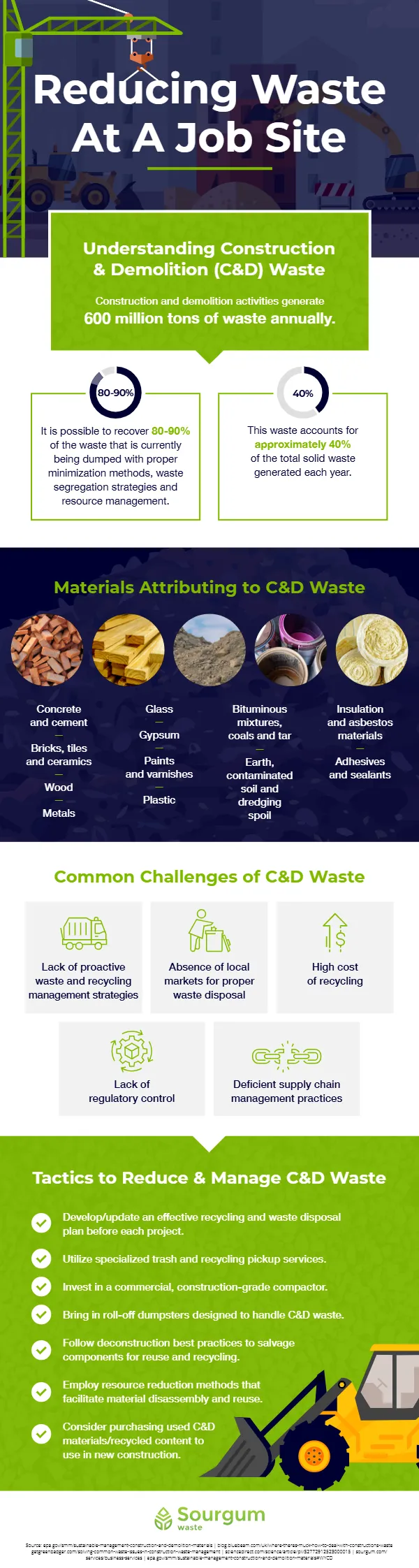
The construction and demolition (C&D) industry is essential for meeting the needs of a rapidly growing population. With new homes, businesses, and infrastructure constantly in development, this sector drives progress worldwide. However, with this expansion comes an environmental challenge: C&D activities generate 40% of global solid waste annually, with the United States contributing nearly 100 million tons each year.
Despite the scale of the issue, there are practical steps companies can take to curb waste. By addressing the causes of waste and adopting proactive strategies, the industry can balance growth with sustainability.
A large percentage of construction waste is avoidable. For example, design errors or a lack of attention to waste reduction during the planning phase contribute significantly to the problem, accounting for roughly 33% of all waste. Other factors include material mismanagement, insufficient planning, and ignorance of recycling opportunities.
One way to reduce waste is to create a detailed waste management plan before construction begins. This plan should outline the materials involved, identify local recycling and disposal options, and establish processes for minimizing waste. Solutions such as roll-off dumpsters, specialized trash services such as those offered by Sourgum Waste, and compactors can help manage waste more effectively on-site.
Deconstruction is another strategy worth considering. This method involves disassembling structures piece by piece to salvage materials for reuse. Not only does this reduce waste, but it also cuts down on the environmental hazards associated with traditional demolition, such as the release of toxic dust and heavy metals.
By focusing on waste reduction, the C&D industry can make a meaningful contribution to environmental preservation while meeting the demands of a growing world. Sustainable practices ensure that development and conservation go hand in hand, creating a better future for all.